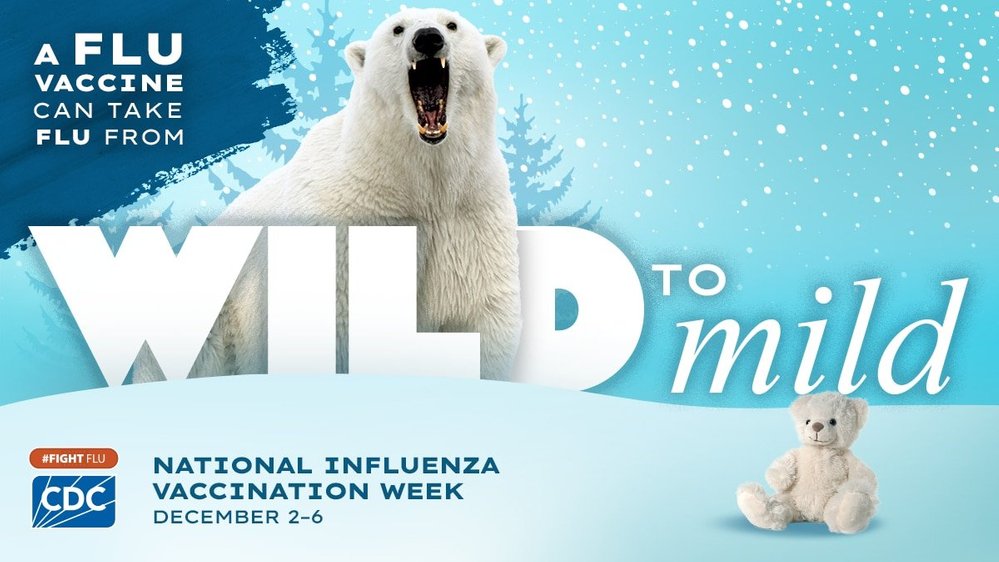
National Influenza Vaccination Week
Protect Yourself from Seasonal Flu
National Influenza Vaccination Week (NIVW) is a critical opportunity to remind everyone 6 months and older that there's still time to protect themselves and their loved ones from flu this flu season by getting their annual flu vaccine if they have not already. CDC data shows that flu vaccination coverage was lower last season, especially among certain higher risk groups, including children. When you get a flu vaccine, you reduce your risk of illness, and flu-related hospitalization if you do get sick. This week is meant to remind people that there is still time to benefit from the first and most important action in preventing flu illness and potentially serious flu complications: get a flu vaccine today.
Everyone age 6 months and older needs to get a flu vaccine every year. Seasonal flu vaccines are the best way to protect yourself and others from the flu.
For many people, seasonal flu is a mild illness. But sometimes, the flu can be serious or even deadly. The flu:
- Is linked to serious infections like pneumonia
- Can make existing health problems worse (for example, long-term heart or lung disease)
- Can lead to hospitalization or death
Flu vaccines can help prevent people from getting sick with the flu — and lower the risk of hospitalization and death for people who do get sick.
The flu spreads easily from person to person. So when you get a flu vaccine, you don’t just protect yourself. You also can help protect everyone around you.
For some people, the flu is more likely to cause serious illness that can lead to hospitalization or even death.
People at higher risk for serious flu complications include:
- Children younger than 5 years — and especially children younger than 2 years
- People who are pregnant or have had a baby in the last 2 weeks
- Adults age 65 years and older
- People with some long-term health conditions (like asthma, diabetes, or heart disease)
- People with a weakened immune system (like people with HIV)
- People who live in long-term care facilities (like nursing homes)
- People from certain racial and ethnic groups, including people who are African American, Hispanic or Latino, and American Indian or Alaska Native
- People with obesity who have a body mass index (BMI) of 40 or higher
If you’re at higher risk for serious flu complications, it’s especially important to get a flu vaccine before the flu starts to spread in your community. And if you care for, or spend time with, someone at higher risk for serious flu complications, a flu vaccine can help protect you both.